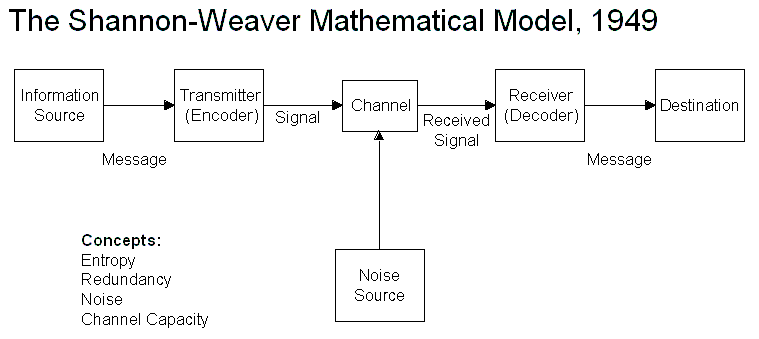
Claude Shannon, a scientist for Bell Telephone Company, developed a formula for telephone signal transmission. Warren Weaver then applied the primary concepts of the formula into interpersonal communication, thus creating the Shannon-Weaver model. The most important concept to take away from the Shannon-Weaver model is that the message that’s transmitted may not be the same message that’s received. This uncertainty that occurs during the delivery of a message is called information entropy.
This link illustrates the Shannon-Weaver model:
http://www.shkaminski.com/Classes/images/Shannon-Weaver%20Model.gif
Visual designers face many problems while trying to create a strong visual message. I separate them into three categories that stem from the Shannon-Weaver model. They are listed below.
•Comprehension Problems: Before the message has been generated, all you have is an information source, or facts. The interpreter of the facts could have simply misinterpreted the facts. That means your effort to visually solve a problem is flawed before its inception. The same is true with the opposite end of the model. The person who is receiving the message just may not “get it”.
•Transmitter Problems: You could have a strong message, but deliver it the wrong way. If you’re selling a quality product, would you really want to print it on cardboard paper?
•External Problems (Noise): You could have done everything perfectly, but things beyond your control could interfere with the message being delivered the way that you intend. Imagine sending a beautiful mailer to constituents, asking them to vote for a candidate. What if the postal worker had to deliver the mailers during a storm, and they got to the constituents damp, dirty and wrinkly?
These are just a sampling of situations you have to think about while designing and communicating.


No comments:
Post a Comment